Khan Yunis Bracelet
Palestine Bracelets

Khan Yunis Bracelet

A stylish and meaningful accessory that transcends fashion.
$14.50

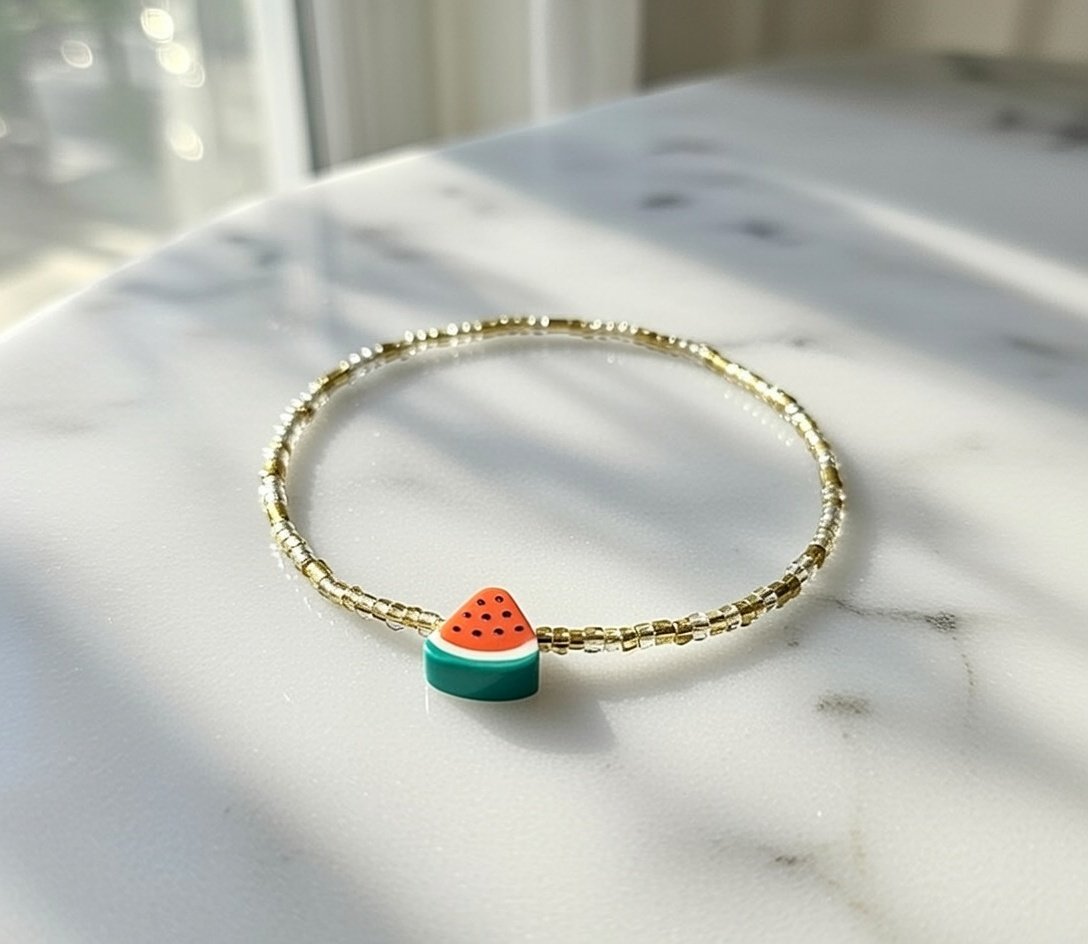
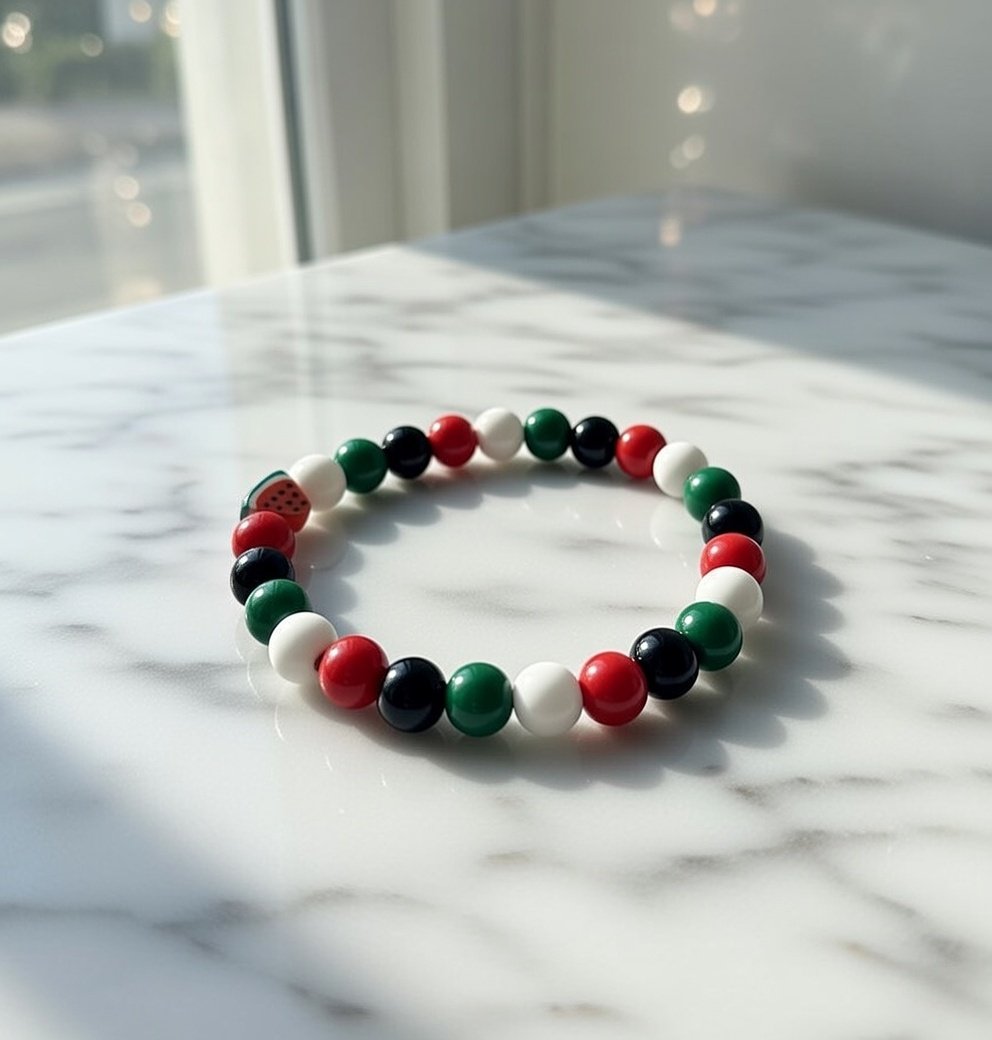
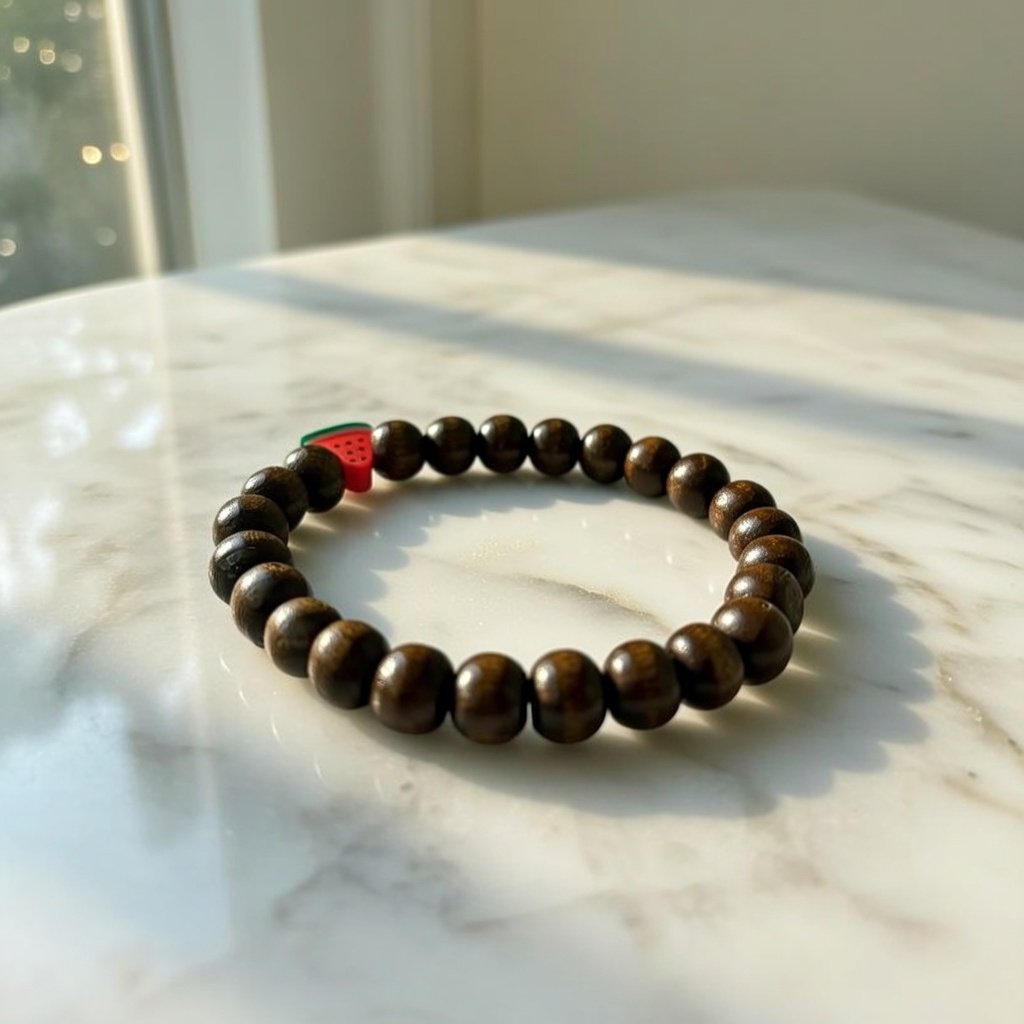
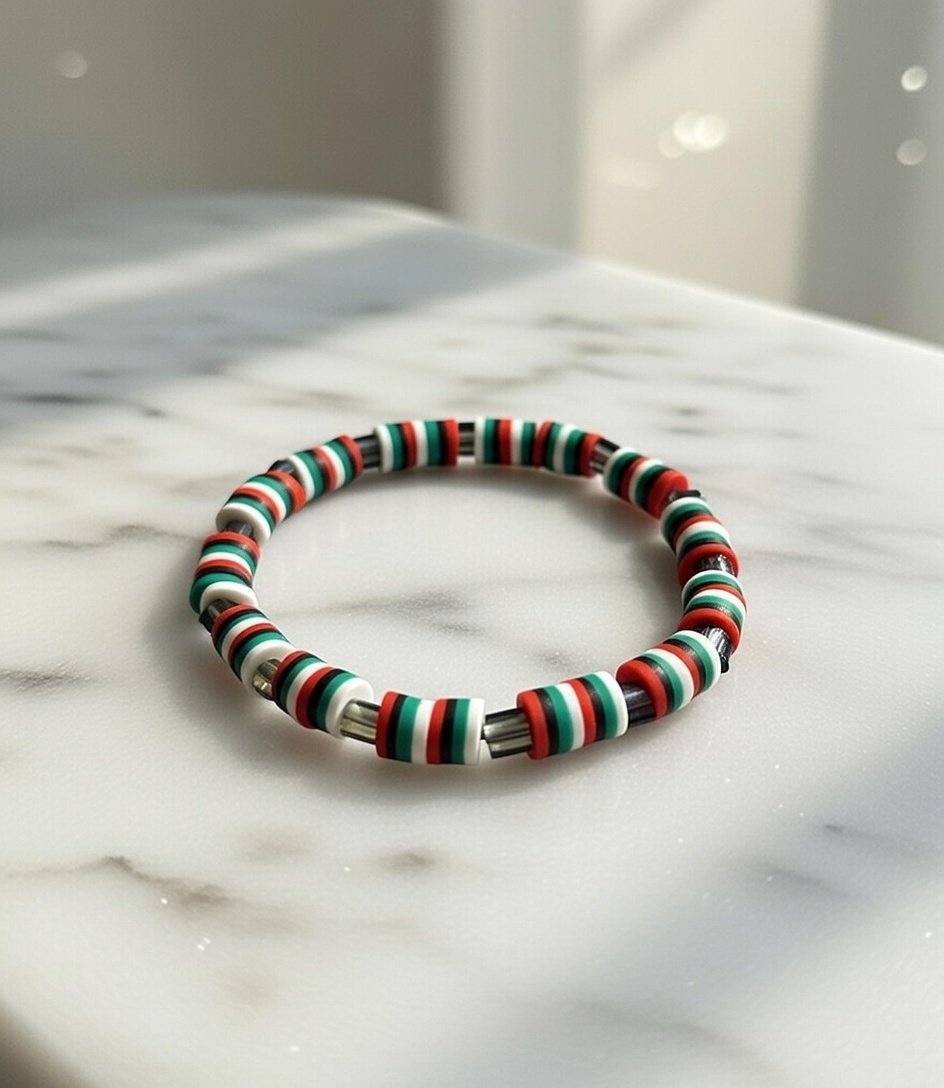
A beautifully handmade bracelet designed to honor and support the culture, heritage, and identity of Palestine. This minimalist piece features rich, dark polished wood beads and a single, vivid watermelon slice polymer clay bead, shaped like a wedge of pie. During times when public displays of the Palestinian flag were banned, the watermelon became a symbol of resistance—because its red, green, black, and white colors mirrored the flag. This bracelet pays tribute to that legacy and invites conversation, solidarity, and remembrance. Each bracelet is handcrafted using durable, double-strung elastic thread for long-lasting wear. The materials were chosen not only for their aesthetic beauty but for their deeper cultural significance.

  • Material Dark polished wood beads + watermelon polymer clay bead
  • Charm Handmade clay watermelon
  • Cord Double-strung elastic thread
  • Design Unisex
  • Cause Supports PMRS
Sizing: Stretch cord for comfort. Women’s: 6.0”–6.5” | Men’s: 6.5”–7.0”. All sizes available: 8”, 7.5”, 7”, 6.75”, 6.5”, 6” — just leave a note at checkout.
Shop on Etsy
The Story Behind the Name

Khan Yunis (Khan Younis)

Gaza District

Khan Yunis is situated in the District of Gaza within Palestine, serving as a significant population center in the southern Gaza region. According to British Mandate village statistics from 1945, Khan Yunis had a population of 11,220 residents. The town's land composition reflected substantial Palestinian ownership: Arab landholders controlled 28,691 dunums, while 27,431 dunums were classified as public land, with no Jewish-owned property recorded.

Land usage patterns in 1945 demonstrated the area's agricultural character. The community cultivated 23,656 dunums with cereal crops, maintained 4,172 dunums of irrigated and plantation land, and had 2,302 dunums of built-up urban space.

The settlement featured notable structures including the castle fortress (Qal'a), a significant mosque, and water wheels (naoura) used for irrigation. The town supported diverse economic activities centered on agriculture and trade. The community maintained active civic institutions, evidenced by a 1944 document from the Egyptian consulate acknowledging Khan Yunis residents' charitable donation to Egyptian poor, demonstrating the town's regional connections and civic generosity.
Continue Exploring

More from the Collection